Comstock Metals extends its zero-landfill, R2v3-certified under Appendix G, recycling process to the Sunshine State, giving Florida solar owners a fully domestic, fully accountable path for panels that reach the end of life. As Comstock Metals' national footprint continues to expand outward from its established facilities, the goal is the same for every new market: replace the patchwork of regional options Florida owners currently have to piece together with a single, traceable, American-run recycling chain.
Florida earns its nickname honestly. Miami alone logs roughly 249 total days of sun a year, and that kind of year-round exposure, paired with a coastline that runs from the Panhandle to the Keys, has made the state one of the country's largest utility-scale solar markets. It's also a state that lives with hurricanes, and that combination of abundant sun and periodic severe weather shapes Florida's solar economics in a way few other states share: strong generation potential offset by real storm risk to the panels themselves.
Florida has installed nearly 22,000 MWdc of solar capacity, placing it #3 in the nation for capacity, and that buildout now generates over 11% of the state's electricity. This is enough power for more than 2.6 million homes, according to SEIA. Utility-scale projects from the state's major power providers account for most of that growth, rather than residential rooftop policy incentives. For a recycler, though, the more immediate volume driver isn't full-scale retirements: it's the steady stream of panels damaged during installation, manufactured with defects, or knocked out of service by the tropical storms and hurricanes that pass through the state most years.
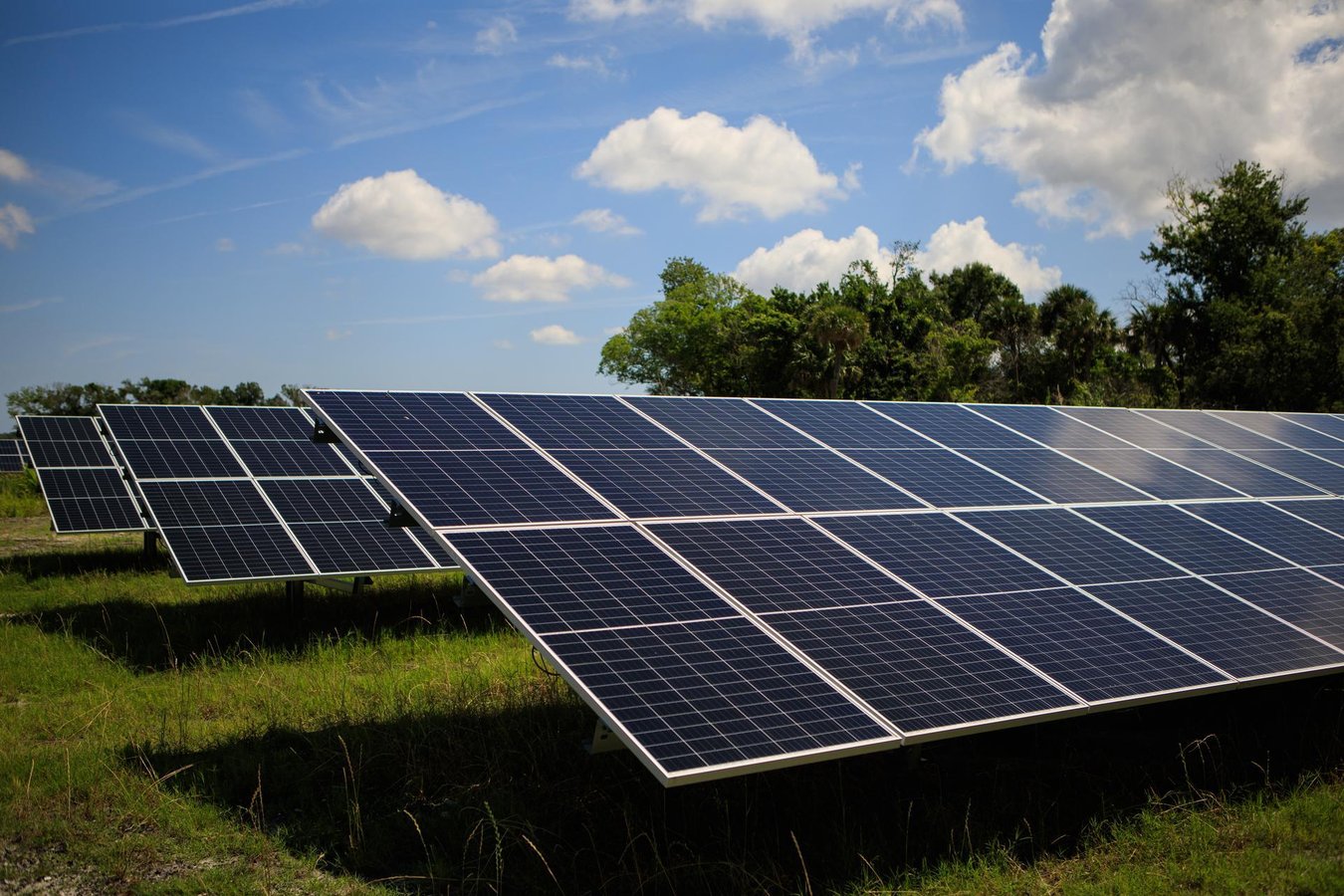
Source: Solar in Florida, SEIA
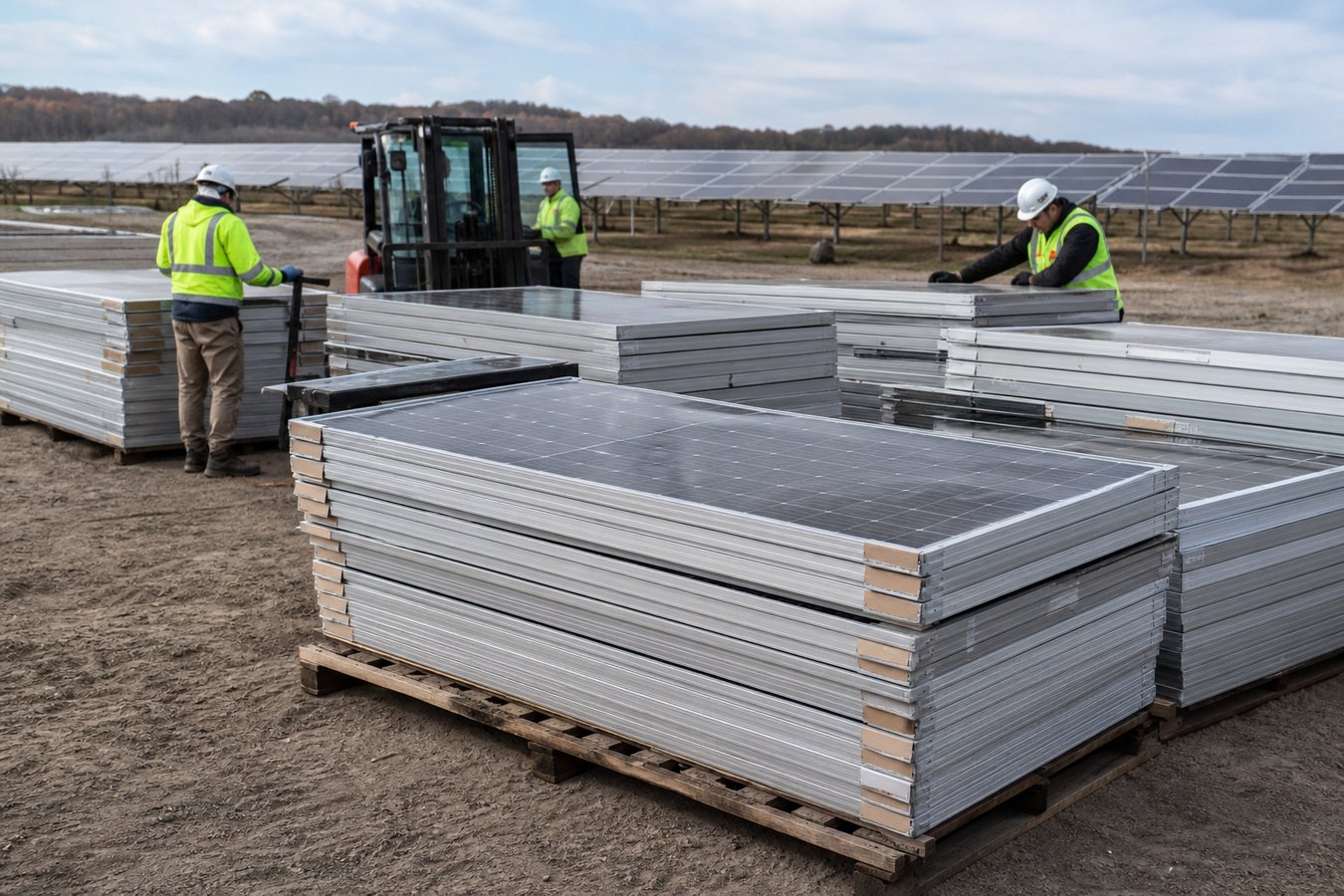
Florida has not adopted a universal waste rule for photovoltaic modules in its environmental code; such treatment currently exists only in California and Hawaii. Panels retired in Florida instead fall under the same hazardous waste framework that governs most other discarded electronics and industrial materials: the federal Resource Conservation and Recovery Act (RCRA), enforced in-state by the Florida Department of Environmental Protection (FDEP) under its delegated hazardous waste program.
Under RCRA, it's the generator, meaning the panel owner, who has to make the hazardous-waste call, not the state. That usually means running Toxicity Characteristic Leaching Procedure (TCLP) testing to check whether leachable lead, cadmium, or other regulated metals exceed the federal threshold. A batch that exceeds the threshold must be manifested and shipped to a permitted hazardous waste facility; a batch that clears it can move as non-hazardous material, though the owner should hold on to the underlying test results in case the classification is ever challenged.
That compliance burden lightens once a recycler qualifies for the 2018 Transfer-Based Exclusion under 40 CFR 261.4, the carve-out Florida has adopted into its own hazardous waste program. It keeps legitimate recycling out of the full hazardous-waste paper trail, but only when the receiving facility can actually document that it meets the exclusion's terms. Owners who skip that verification step are usually the ones who end up with liability they thought they'd already closed out.
Florida's solar-siting statute (F.S. 163.3205) has guaranteed solar facilities permitted use on agricultural land and set buffer standards since 2021, and a 2026 amendment (Ch. 2026-2, from HB 1417) added construction-phase requirements around erosion control and stormwater management. Even with that update, the statute still stops short of requiring a decommissioning plan or financial assurance for panel removal at the end of life; a 2026 bill, SB 200, would have let counties impose exactly that kind of requirement, but it died in committee on March 13, 2026, leaving no statewide bonding requirement to fill the gap. That means a Florida project's real decommissioning obligations may depend more on what a given county chooses to require during permitting than on anything set at the state level. Owners shouldn't assume their permit already covers this; it's worth confirming on a case-by-case basis and flagging for legal review before treating panel disposal as tomorrow's problem.
Nationally, the EPA still hasn't decided whether to classify solar panels as Universal Waste across all fifty states; its regulatory agenda lists a proposed rule from February 2026, and a final rule targeted for August 2027, so any change here is still more than a year out. That designation, if adopted, would simplify moving panels across state lines for recycling; until then, any interstate shipment must satisfy the rules of both the origin and destination states. Comstock Metals' free tool tracks how those classifications currently differ state by state.
Florida's hurricane season delivers a stream of storm-damaged panels every year at a scale most other states simply don't see, and a shipment that already looks like storm debris is an easy one for a handler to write off as scrap rather than document properly. Comstock Metals built its business model around refusing exactly that shortcut.
Every panel Comstock Metals collects from a Florida site is logged at pickup and tracked through material recovery at an R2v3-certified U.S. facility. Nothing gets landfilled along the way, and nothing quietly leaves the country for another party to sort out later.
Florida asset owners working with Comstock Metals get access to:
Keeping every one of those steps in-house is what lets Comstock Metals give Florida customers a single point of contact, hold the line on FDEP and RCRA compliance, and shrink the drawn-out financial and legal risk that builds up whenever retired panels get handed off to whichever buyer offers the lowest price.
Comstock Metals' Qualifications:

Contact Comstock Metals today to learn more about decommissioning and end-of-life solar panel management in Florida.
Florida combines one of the country's largest installed solar bases with no PV-specific universal waste designation and routine hurricane exposure, a combination that adds real compliance responsibility and unplanned panel volume that most other states don't see. On top of that, Florida's solar policy can vary meaningfully from county to county, so with that much solar exposed to that much potential storm damage, partnering with a true recycling partner like Comstock Metals, one built to handle all of those variables with ease, takes real weight off an owner's shoulders.
Storm-damaged modules go through the same evaluation as any other retired panel, but not every recycler will take them; plenty turn away anything that isn't in clean, undamaged condition. Comstock Metals does take them and recycles those panels rather than scrapping them, which is a meaningful distinction in a state where wind and flood damage are a routine part of a panel's life story, not a rare exception.
Yes. Both the crystalline silicon panels that make up most of Florida's utility-scale fleet and thin-film modules can undergo a qualified recycler's process that separates glass, aluminum, silicon, and other recoverable materials, whether the panels arrive intact or damaged.
Everything from removal through certified processing: decommissioning support, transportation, FDEP- and RCRA-aligned paperwork, and R2v3-certified recycling, covering utility-scale, commercial, and residential solar sites anywhere in the state.
A handful of basics: where the project sits, how many panels and what type, their current condition, your timeline, and whether you want decommissioning or hauling, folded into the scope. That's usually enough for Comstock Metals to price it out.
The Florida Department of Environmental Protection runs the state's RCRA-delegated hazardous waste program. In the absence of a Florida-specific universal waste rule for PV modules, that's the framework retired panels fall under today.