
Panel Deinstallation
Safe removal of solar panels from existing racking systems.
Seamless. Sustainable. Turnkey.
Solar decommissioning refers to the complete removal of an end-of-life solar array or the clearing of a legacy array for a new system repower, ideally provided as a turnkey service.
Solar panels may become damaged from severe weather or through natural degradation. When that happens, responsible recycling is essential to prevent landfill contamination, recover critical materials, and protect a clean energy ecosystem.
Solar decommissioning is the process of safely removing and recycling solar panels, racking, inverters, wiring, conduit, ancillary equipment, and more from end-of-life or to-be repowered sites.
Comstock Metals ensures every solar component is responsibly recovered. Our site services team has executed dozens of projects so power production teams can stay focused on producing power.
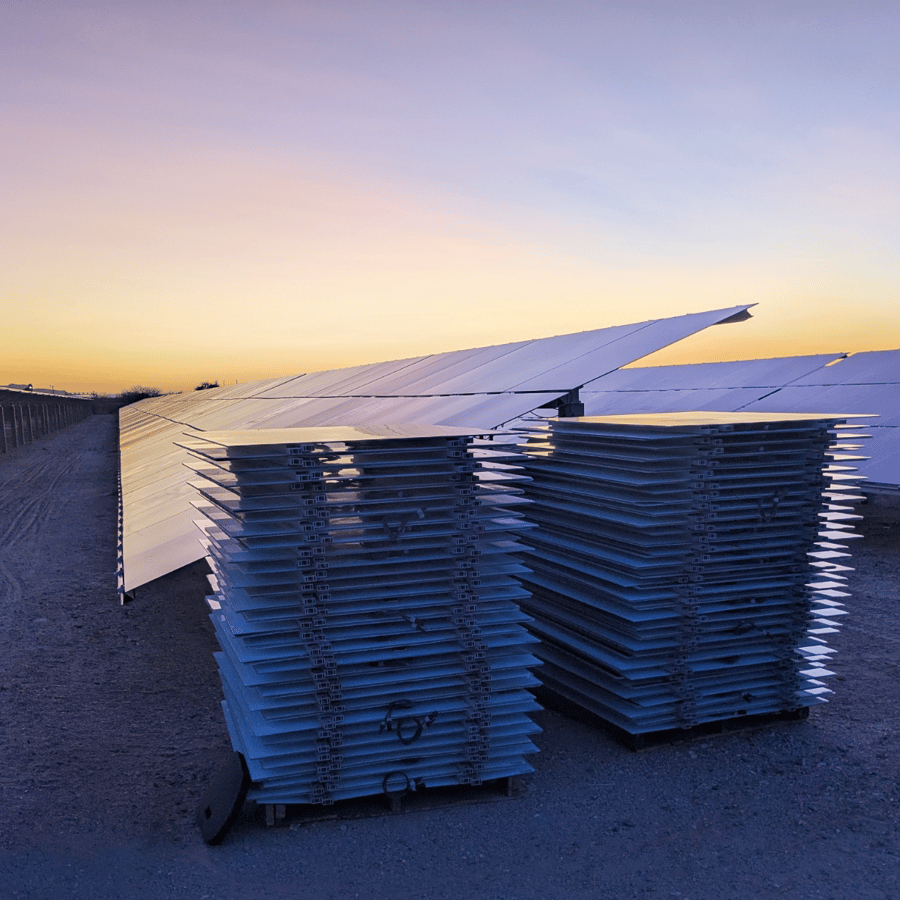
We offer comprehensive decommissioning services tailored to the specific site, with end-to-end management through array deconstruction, packaging, logistics, and recycling by Comstock’s internal experts.
Safe removal of solar panels from existing racking systems.
Secure packaging and preparation of panels and components for transport.
Nationwide transport to Comstock’s certified recycling facilities.
Full oversight for safety and environmental compliance.
Dismantling and clearing of mounting systems, supports, and foundations.
Strict training and certification standards for safe, professional operations.
Where requested, we can fully remove materials associated with the legacy array and restore the land to as close to pre-solar condition as possible.
Comstock Metals integrates decommissioning, logistics, and recycling under one roof to ensure efficiency, traceability, and full regulatory compliance. We offer:
“Solar energy can’t truly be considered truly green until a recycling plan is in place for the array and its components.”
 Paul Tecchio
Decommissioning, Comstock Metals
Paul Tecchio
Decommissioning, Comstock Metals
More projects are now required to include a recycling cost estimate as part of their decommissioning bond proposal at initial permitting and again on a recurring basis (often every five years) as the array ages. For projects with a recycling agreement in place naming Comstock Metals as the panel recycler, we provide that cost estimate at no charge, updated each time your bond needs to be refreshed.
We’re glad to compete for the decommissioning work itself. Our agreements simply give Comstock Metals the first right to recycle the panels covering installation damage, storm-related losses, and end-of-life volume when the time comes.
Commercial & utility-scale solar owners and operators. Whether it’s a rooftop commercial system in the heart of a metro or a utility array in the desert, all systems will eventually come down. When that time comes, we can take the problem off your hands.
Contact UsOur facilities operate under R2v3 and RIOS certifications and maintain active registration with ISNetworld, guaranteeing environmentally responsible processing and auditable documentation for ESG and sustainability reporting.
Plan your project
Talk with our field services team about removal, logistics, and certified zero-landfill recycling for your site.
Answers to common questions about solar panel decommissioning, recycling, and regulatory compliance from our certified field and recycling teams.
For starters, we need to know what materials are on site, so that would be the makes and models of all of the panels, inverters, and more. After that, we would need to define the scope of work. Once we know what materials are there and what we need to remove, we would need to schedule a site visit for our Decommissioning Team to come out and assess that particular site.
That is entirely case dependent. The bigger the system, the longer it takes, but other factors matter too, such as fixed versus tilt mounting, ground or weather conditions, panel type (thin film versus full frame), and more.
Comstock Metals has downstream certified recyclers for specialty items like inverters. For easier-to-recycle items such as the racking, wiring, conduit, and concrete, we will send them to local recyclers, making sure to get documentation for everything. Some items, such as buildings, fencing, or other items that hold value in their current form, can be handed back to the client for reuse, put up for sale locally, or donated to a charitable or non-profit organization.