Comstock Metals is a leading solar panel recycling provider in California, operating a facility in Hanford and recognized by the California Department of Toxic Substances Control as a qualified recycler authorized to manage solar panels as Universal Waste.
Featuring warm & dry summers, and mildly wet winters across much of the state, California is home to cool coastal regions, snowy mountain ranges, and hot desert environments. Despite this diverse climate, many areas in California experience between 260 and 300 sunny days a year, including large population centers like Los Angeles, San Diego, San Francisco and is one of the world’s largest economies.
Thanks to this favorable environment, California was an early leader in deploying solar panels. California has installed over 55GW of solar capacity, which ranks it as #1 in the United States according to SEIA. This supports progress towards the California Climate Commitment: to reach completely renewable power generation by 2045. However, the main source of solar panels for recycling come from stock damaged during installation, defective panels manufactured, and degradation during the life cycle of the panel.

Source: Solar in California SEIA
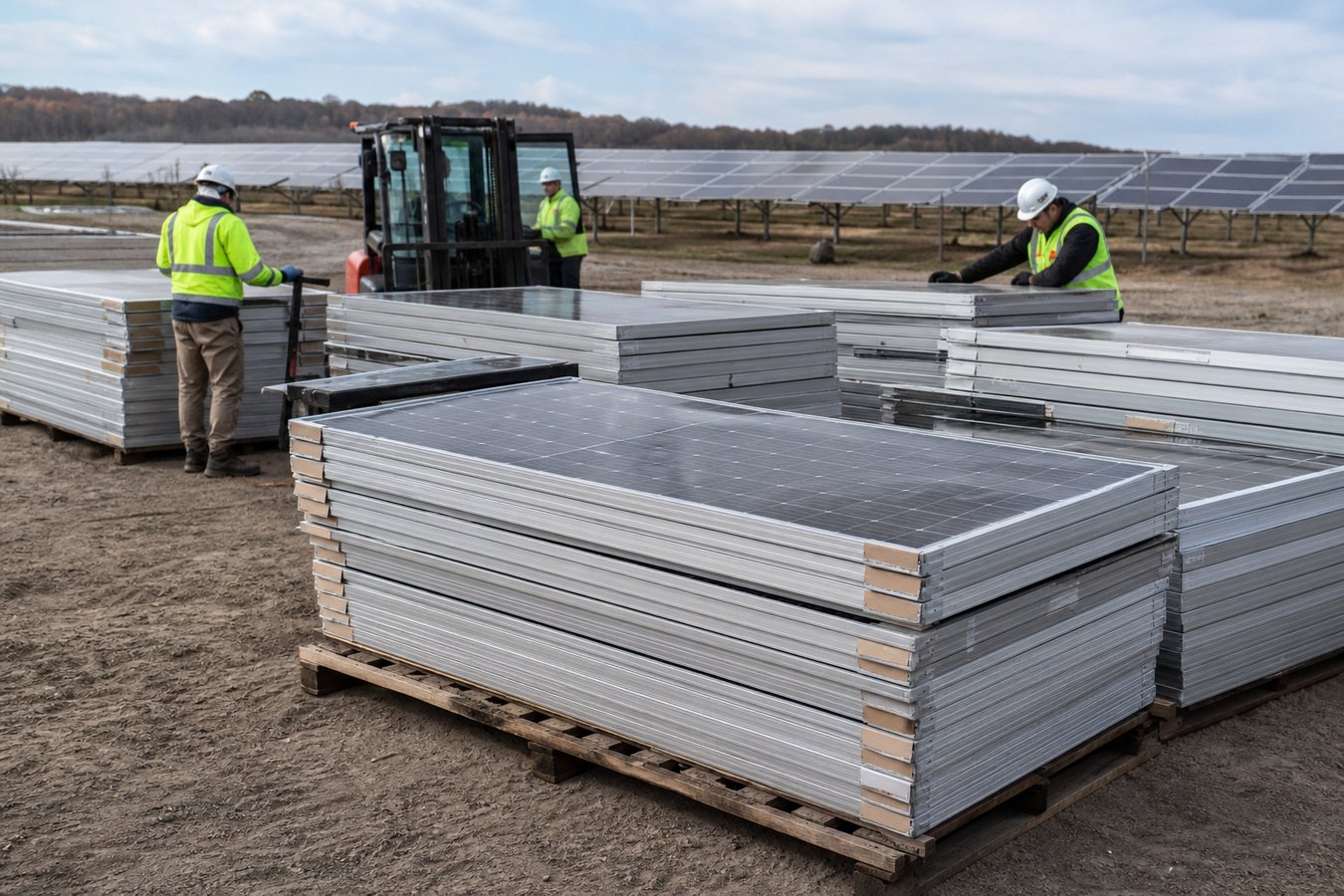
California regulates end-of-life solar panels as universal waste. Most discarded photovoltaic (PV) modules are managed under California's Universal Waste Regulations, which impose specific requirements for labeling, storage, transportation, and handling to reduce environmental risks. Panels that don't qualify as universal waste may instead be regulated as hazardous waste.
Decommissioning projects must comply with multiple environmental and waste management requirements. While California does not have a single statewide solar decommissioning law for all projects, owners must properly remove, transport, and recycle or dispose of panels in accordance with Department of Toxic Substances Control (DTSC) regulations and other applicable state and local permitting requirements.
Project owners are expected to use qualified recycling facilities as defined by the DTSC whenever possible and maintain records demonstrating proper end-of-life management. Additionally, the DTSC requires the submission of certain documents annually and also when preparing for a specific recycling project:
In summary, in California, recycling is strongly encouraged, and documentation is critical.
On the federal level, the U.S. Environmental Protection Agency has yet to make a decision on whether to designate solar panels as Universal Waste (UW). If adopted, the UW designation could significantly streamline the transportation of sending solar panels for recycling across state lines.
As it stands, state-specific rules in states of origination and destination govern the disposal and transportation of panels. Our free tool here provides a resource to understand that patchwork of rules.
California’s port access means that some recyclers choose to export end-of-life panels rather than fully recycling them domestically. The combination of Comstock Metals’ industrial-scale recycling capacity, DTSC qualification, and R2v3 Certification mean Comstock Metals can most effectively and responsibly handle the supply of end-of-life panels generated in the state.
Comstock Metals provides end-to-end solar panel recycling services for solar panels across California, including:
We manage every step of the end-of-life panel supply chain in-house to simplify logistics, ensure regulatory compliance, and reduce financial and legal liability giving asset owners confidence that their end-of-life solar panels are handled responsibly.
Comstock Metal’s Qualifications:


Contact Comstock Metals today to learn more about decommissioning and end-of-life solar panel management in California or read more on developments in California here.
Recycling solar panels in California helps comply with the state's universal waste regulations, diverts valuable materials from landfills, and reduces environmental and regulatory liability.
Most crystalline silicon and thin-film solar panels installed in California can be recycled through qualified facilities that recover glass, aluminum, silicon, and other materials. Although only certain recyclers, such as Comstock Metals, also accept damaged panels.
Full-service providers like Comstock Metals can manage decommissioning, packaging, transportation, compliance documentation, and certified recycling for utility-scale and commercial solar projects across California.
To receive an accurate quote, be prepared to provide the project location, number and type of panels, panel condition, project timeline, and whether decommissioning and transportation services are needed.
California generally regulates end-of-life solar panels as universal waste when they meet applicable requirements, subjecting their handling, transportation, and recycling to Department of Toxic Substances Control (DTSC) regulations.