Comstock Metals brings its R2v3-certified, zero-landfill recycling process to solar asset owners across Texas, giving the state a domestic alternative to exporting or landfilling end-of-life photovoltaic modules. Comstock Metals' growing network of industrial-scale facilities, anchored today in Nevada, California, and Ohio, is built to extend that same certified standard into markets like Texas as demand grows. Comstock Metals offers pickup, transportation, and processing, so Texas asset owners aren't limited to the regional options available near them.
Texas's sheer size produces enormous climate variation, from the humid, subtropical Gulf Coast around Houston to the arid deserts surrounding El Paso and the semi-arid plains of the Panhandle. That range still adds up to strong solar performance almost everywhere: Houston alone logs roughly 204 sunny days a year, and the desert stretches of West Texas rank among the sunniest terrain in the country. Population centers such as Houston, Dallas-Fort Worth, San Antonio, and Austin anchor one of the largest and fastest-growing electricity markets in the nation.
Texas has converted that solar resource into a rapid buildout. The state has installed more than 53,500 MWdc of solar capacity, placing it #2 in the nation for cumulative capacity and #1 for new capacity added in 2025, according to SEIA. With data-center growth and industrial expansion pushing ERCOT's grid demand higher every year, solar and storage now sit at the center of how Texas plans to keep pace. As in most states, though, today's recycling volume mostly comes from sources other than full retirements: installation damage, manufacturing defects, and ordinary degradation over a panel's service life.
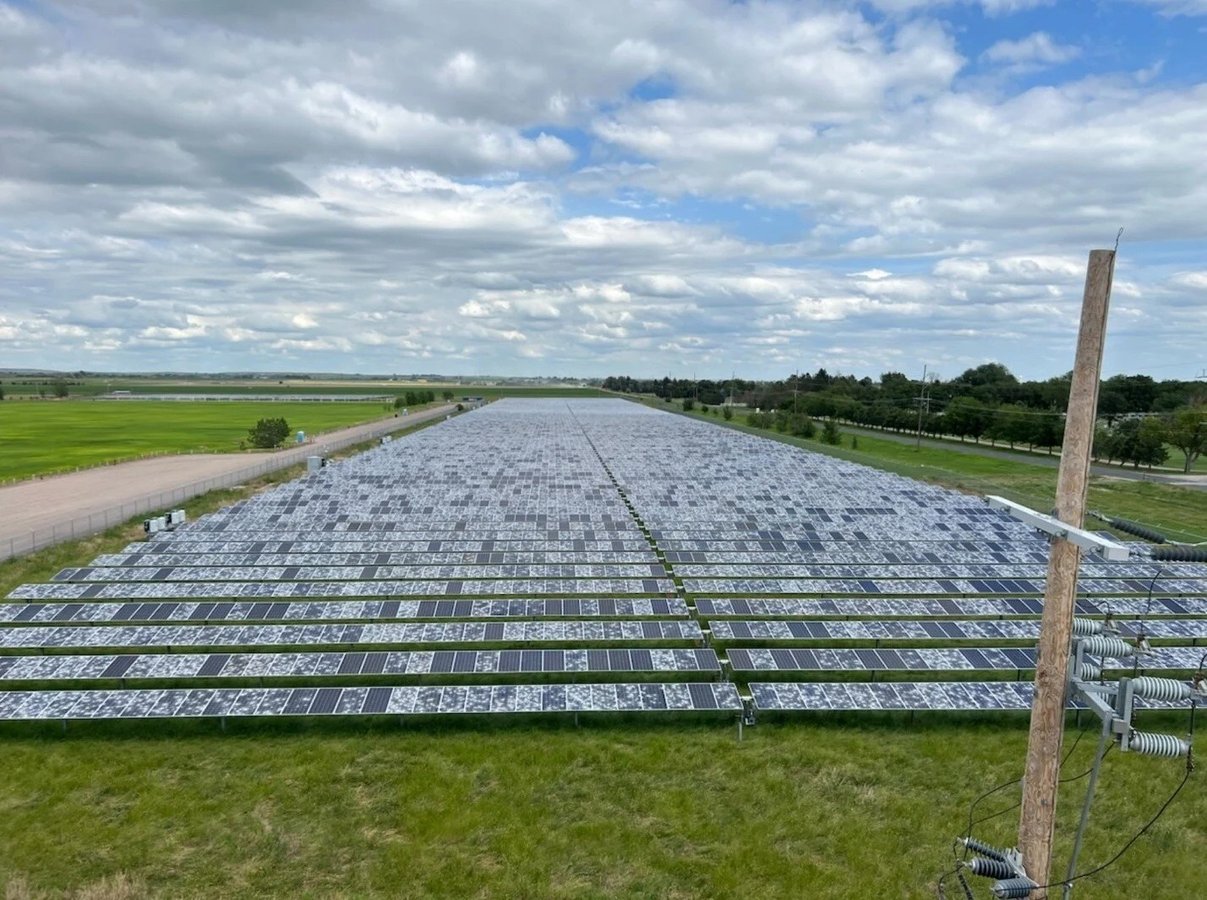
Source: Solar in Texas, SEIA
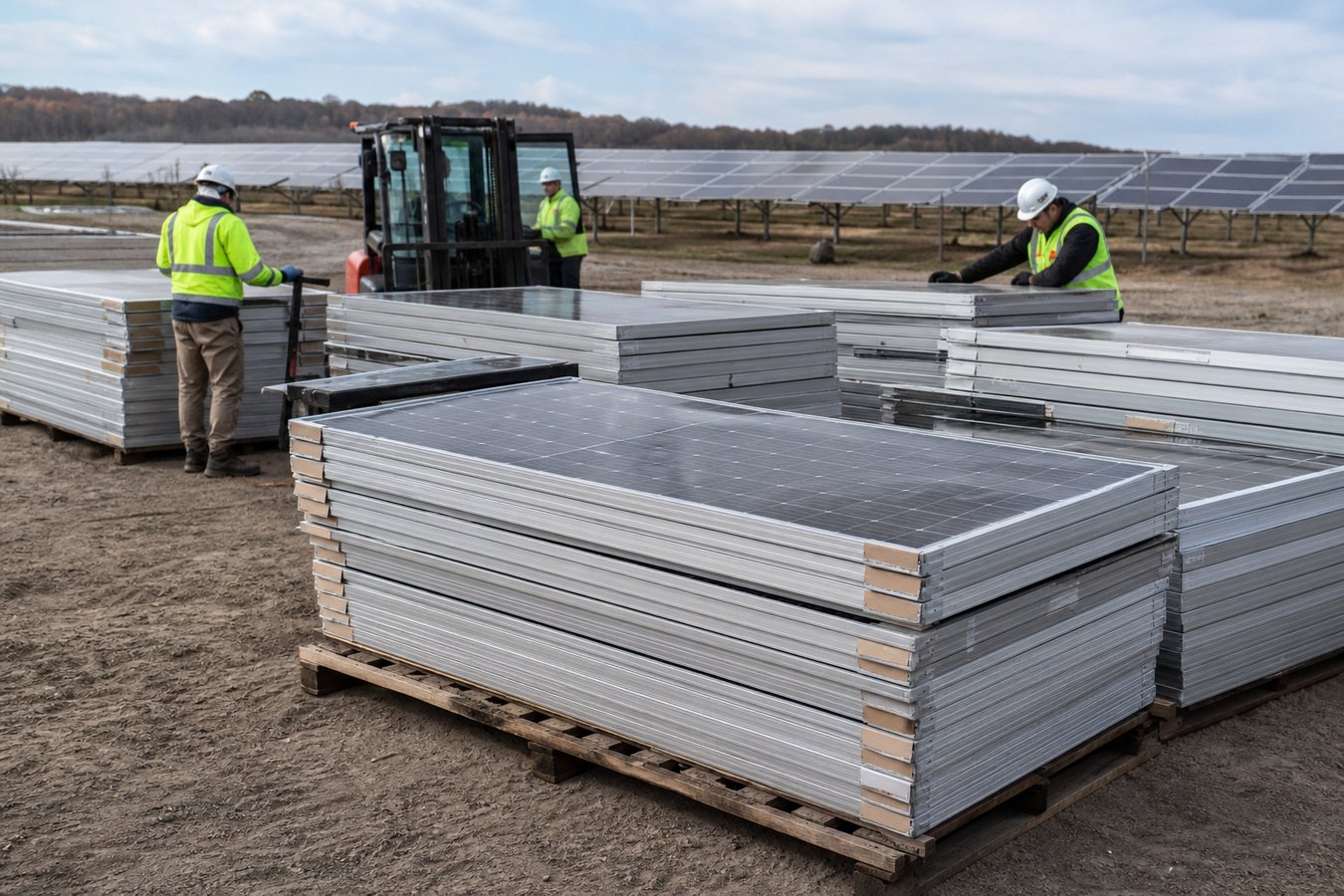
Unlike California and Hawaii, Texas has not adopted a universal waste rule specific to photovoltaic modules. Discarded panels here are instead evaluated under the same framework that governs most industrial waste streams: the federal Resource Conservation and Recovery Act (RCRA), as implemented by the Texas Commission on Environmental Quality (TCEQ) under the state's authorized hazardous waste program.
In practice, that puts the determination on the generator, meaning the asset owner or operator, who must decide whether decommissioned panels exhibit hazardous characteristics, typically through Toxicity Characteristic Leaching Procedure (TCLP) testing for constituents such as lead, silver, and cadmium. Panels that fail TCLP testing must be manifested, tracked, and processed as hazardous waste through a permitted facility; panels that pass can generally move as non-hazardous material, provided the owner retains documentation supporting that determination.
Two federal recycling-specific exclusions under 40 CFR 261.4, the 2015 Verified Recycler Exclusion and the 2018 Transfer-Based Exclusion, can meaningfully reduce that burden when panels are sent to a legitimate, qualified recycler rather than being managed as waste outright. Confirming that a recycler operates within, and can document, one of these exclusions is often what separates a routine transaction from an open-ended liability.
Texas does not currently mandate a statewide decommissioning plan or bond for solar projects, the way some other states have begun to require; where those obligations exist today, they tend to surface at the county or interconnection-agreement level rather than from a single state law. That makes it especially important for Texas owners and operators to build responsible recycling into their own planning rather than waiting on a state mandate to force the issue.
At the federal level, the EPA has yet to decide whether to designate solar panels as Universal Waste nationwide. Adopting that designation would simplify shipping panels across state lines for recycling. Until then, the rules of both the origin state and the destination state apply to any interstate move. Our free tool breaks down how those rules currently differ from state to state.
Texas is also home to some of the busiest port infrastructure in the country, including the Port of Houston, which provides some recyclers with an easy, low-scrutiny path to export end-of-life panels overseas rather than processing them domestically.
Comstock Metals takes the opposite approach. Every panel collected from a Texas project is tracked from pickup through final material recovery at one of Comstock Metals' R2v3-certified U.S. facilities, with nothing landfilled and nothing shipped abroad for someone else to manage.
Across Texas, Comstock Metals delivers full-service recycling support for solar asset owners, spanning:
Managing every stage of this process in-house lets Comstock Metals simplify logistics for Texas customers, keep them aligned with TCEQ and RCRA requirements, and mitigate the financial and legal exposure associated with unmanaged end-of-life panels.
Comstock Metal's Qualifications:


Contact Comstock Metals today to learn more about decommissioning and end-of-life solar panel management in Texas.
Without a state universal waste rule to lean on, Texas asset owners carry more of the compliance burden themselves. Working with a qualified recycler keeps decommissioned panels out of landfills, supports TCEQ's hazardous waste requirements, and limits long-term liability exposure.
Yes. Both the crystalline silicon panels common on utility-scale Texas projects and thin-film modules can be recycled through a qualified facility that separates out glass, aluminum, silicon, and other recoverable materials. Comstock Metals will also accept panels that arrive damaged.
Comstock Metals manages decommissioning, packaging, transportation, TCEQ- and RCRA-aligned compliance documentation, and certified recycling for utility-scale, commercial, and industrial solar installations throughout Texas.
Project location, panel count and type, panel condition, timeline, and whether decommissioning or transportation should be included, that's generally enough for Comstock Metals to scope an accurate quote.
Generally, yes, unless the panels move to a recycler operating under a federal recycling exclusion. Because Texas has no PV-specific universal waste rule, the standard RCRA hazardous waste determination process, including TCLP testing where applicable, is what typically governs.
The Texas Commission on Environmental Quality (TCEQ) administers the state's hazardous waste program under RCRA authority. That framework, rather than a state universal waste designation, currently governs the management of discarded PV modules in Texas.