From its recycling operation in Cambridge, Ohio, Comstock Metals provides Ohio and the wider Midwest with a true home-state option for what happens to a solar panel once it's done generating power. That's a big differentiator against other recyclers, who have to ship Midwest panels out to a hub in another region.
While Ohio isn't part of the “Sun Belt,” its solar buildout rivals those of even the sunniest states. This is thanks to industrial demand from a heavy manufacturing load, a wave of new data centers across the Pennsylvania, New Jersey, and Maryland (PJM) grid, and utilities looking to diversify generation without waiting on new transmission. Ohio's concentration of solar panel manufacturing facilities also sets it apart from most other states seeing this kind of rapid solar buildout.
Comstock Metals announced a service agreement in July 2026 with Illuminate USA to recycle solar panel materials from its advanced manufacturing operations in Pataskala, Ohio. This is a strong, recent example of Ohio's growing leadership in solar-panel recycling.
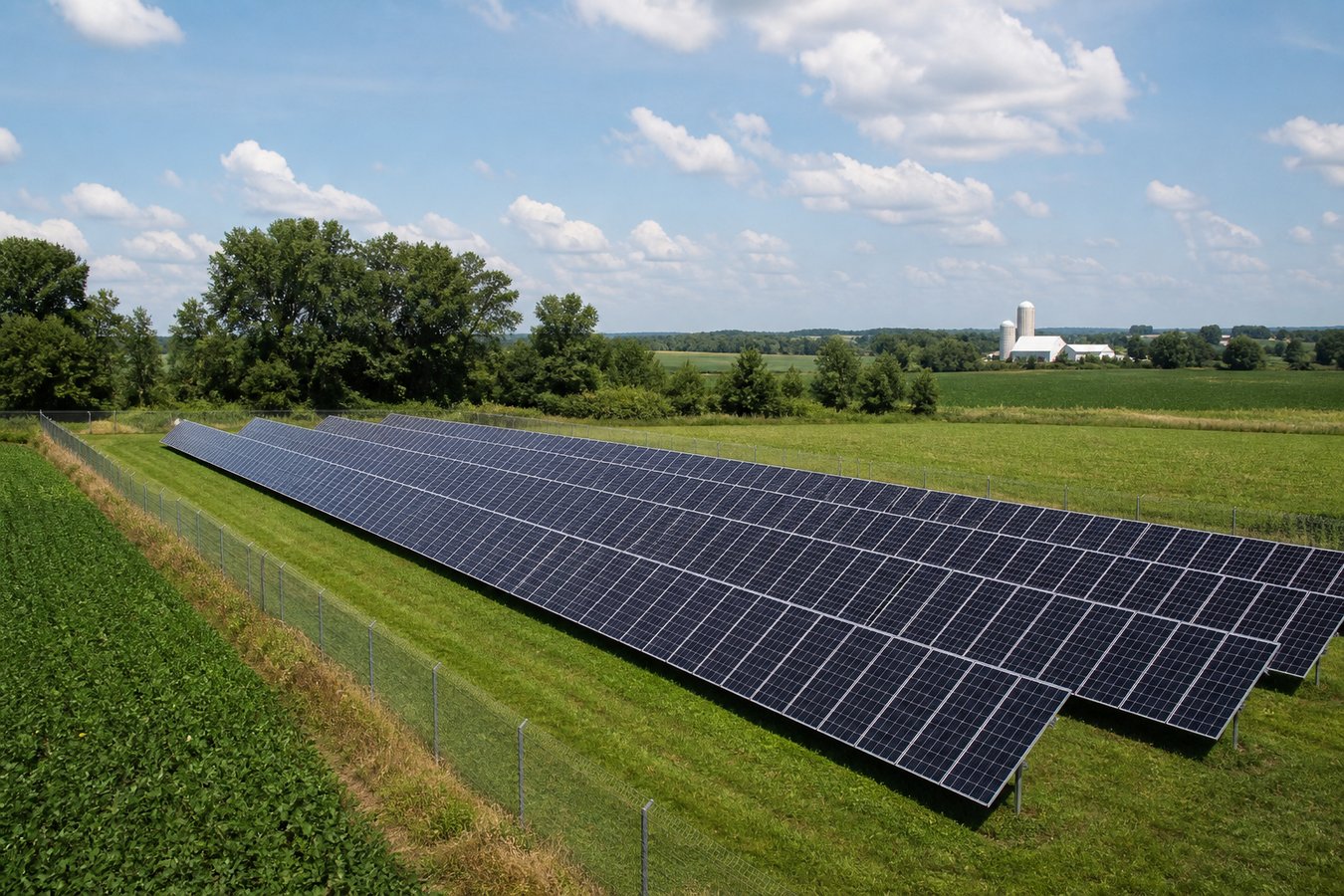
Source: Solar & Storage Ohio, SEIA
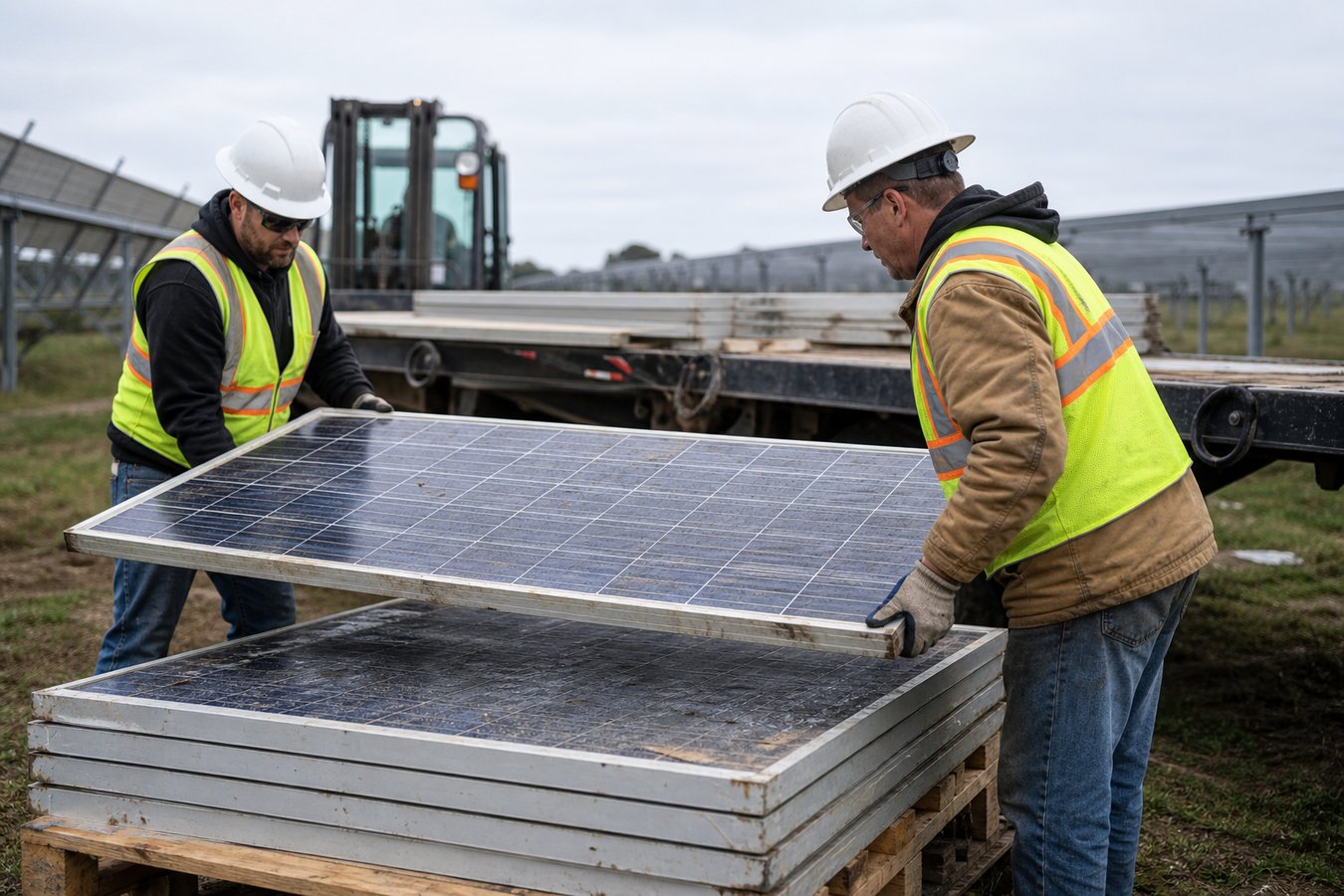
Ohio hasn't classified photovoltaic modules as universal waste; treatment remains limited to California and Hawaii. What governs a retired panel in Ohio instead is Ohio EPA's hazardous waste program, adopted under its delegated federal Resource Conservation and Recovery Act (RCRA) authority and set out in Ohio Administrative Code Chapter 3745-51.
Ohio puts the burden of proof on whoever owns the retired panels. That owner is expected to run Toxicity Characteristic Leaching Procedure (TCLP) testing, the standard method for checking whether regulated metals in the panel would leach out at unsafe concentrations, and the result of that test determines the path: a manifested shipment to a licensed hazardous waste handler if it fails, or ordinary non-hazardous handling if it passes.
A pair of federal exemptions written into 40 CFR 261.4, known as the 2015 Verified Recycler Exclusion and the 2018 Transfer-Based Exclusion, takes a lot of that weight off once panels are handed to an actual recycler instead of routed through the waste stream, so long as that recycler can show it genuinely meets the exclusion's conditions.
Ohio does stand out from other states on one point: large solar projects certified by the Ohio Power Siting Board are required to plan for their own end-of-life up front. Under OAC 4906-4-09(F), a certified facility must file a decommissioning plan, maintain a performance bond equal to an independent engineer's cost estimate, updated every five years, and complete removal within twelve months of the facility's useful life ending. That's a real financial-assurance requirement, not just a best practice, and it puts Ohio ahead of states like Texas and Florida, where Comstock Metals found no comparable statewide mandate.
One open question at the federal level is whether the EPA will eventually designate solar panels as Universal Waste nationwide, which would make crossing state lines with retired panels far simpler than it is today. Until that happens, an interstate shipment has to satisfy the rules of the places it starts and ends. Comstock Metals built a free tool specifically to help sort out that state-by-state patchwork.
Ohio's installed solar panels already generate close to 6% of Ohio's electricity and power roughly 860,000 homes. SEIA projects Ohio's capacity to climb toward 9,000 MW within five years, which could earn Ohio a spot in the top-ten growth ranking nationally. Manufacturing-scale volume is the part of that story most relevant to recycling: alongside the usual drivers every state deals with, installation damage, degradation, and equipment that fails before its expected service life, Ohio also generates panel-level scrap and rejects directly at the manufacturing stage, a source of recyclable material most other states simply don't have.
Maintaining an in-state hub changes the economics for Ohio customers: shorter hauls, faster turnaround, and a recycler that isn't treating Ohio as an afterthought. It also puts Comstock Metals close to the manufacturers themselves, useful for panel producers and assemblers who need a downstream partner for defective units, warranty returns, and production scrap, not just end-of-life volume from installed systems years down the line.
Every panel that comes through Comstock Metals' Cambridge facility is tracked from intake to final material recovery, with the same zero-landfill, R2v3-certified process used at every Comstock Metals site. Nothing gets buried, and nothing gets quietly exported for someone else to sort out.
Ohio customers working with Comstock Metals get:
Handling every stage under one roof is what lets Comstock Metals shorten the distance between an Ohio pickup and a recovered material, stay ahead of Ohio EPA and OPSB paperwork, and prevent the kind of liability that quietly accumulates when nobody can say for certain where a retired panel actually ended up.
Comstock Metals' Qualifications:


Contact Comstock Metals today to learn more about decommissioning and end-of-life solar panel management in Ohio.
Ohio combines an actual in-state Comstock Metals facility, a real manufacturing base (First Solar's Perrysburg and Walbridge plants), and one of the few state-level decommissioning bond requirements that Comstock Metals has found so far. Together, this means more of Ohio's recyclable volume originates at the production stage, and more of the compliance groundwork is already built into the way large projects are permitted.
For solar facilities certified by the Ohio Power Siting Board, yes. OAC 4906-4-09(F) requires a filed decommissioning plan, an engineer-certified cost estimate updated every five years, and a performance bond sized to that estimate, along with removal within twelve months of the facility's useful life ending.
Yes. Comstock Metals processes manufacturing-stage material, damaged or out-of-spec panels, warranty returns, and defective units through the same R2v3-certified, zero-landfill process used for panels retired after years in the field.
Decommissioning or any site services required, for example, freight to the Cambridge facility, paperwork aligned with Ohio EPA and RCRA expectations, and R2v3-certified processing. That spans utility-scale solar farms, the manufacturers around Toledo, and commercial rooftop or ground-mount systems alike.
A rough panel count, the manufacturer and condition of the units, your project location, the timeline you're working with, and whether you'd like hauling or decommissioning bundled in. Comstock Metals can put together a real number from that alone.
Two of them are working on different parts of the problem. Ohio EPA handles the hazardous-waste classification question under its RCRA authority, while the Ohio Power Siting Board enforces the decommissioning plan and bonding requirement for the large facilities it certifies. Neither treats photovoltaic modules as universal waste.