Kentucky’s solar buildout is now large enough, and old enough, that end-of-life panels are becoming a real materials-management issue. Comstock Metals extends its R2v3-certified, zero-landfill recycling and site services into Kentucky, giving solar asset owners here a documented, domestic path for retired photovoltaic modules instead of a patchwork of regional options. Comstock’s network of industrial-scale facilities extends from its hubs in Nevada, California, and Ohio to serve new markets, including Kentucky, with coordinated pickup, transportation, and no-landfill recycling.
Kentucky’s weather sits at a genuine climate crossroads: humid, subtropical air from the south and continental fronts from the Ohio Valley. This makes for muggy summers alongside a real four-season climate. Major population centers like Louisville and Lexington log roughly 190 days with some sunshine a year. This climate has supported real, if modest, solar growth: Kentucky has installed 1,709 MWdc of solar capacity, placing it 34th nationally overall but 11th for capacity added in 2025 alone, according to SEIA.
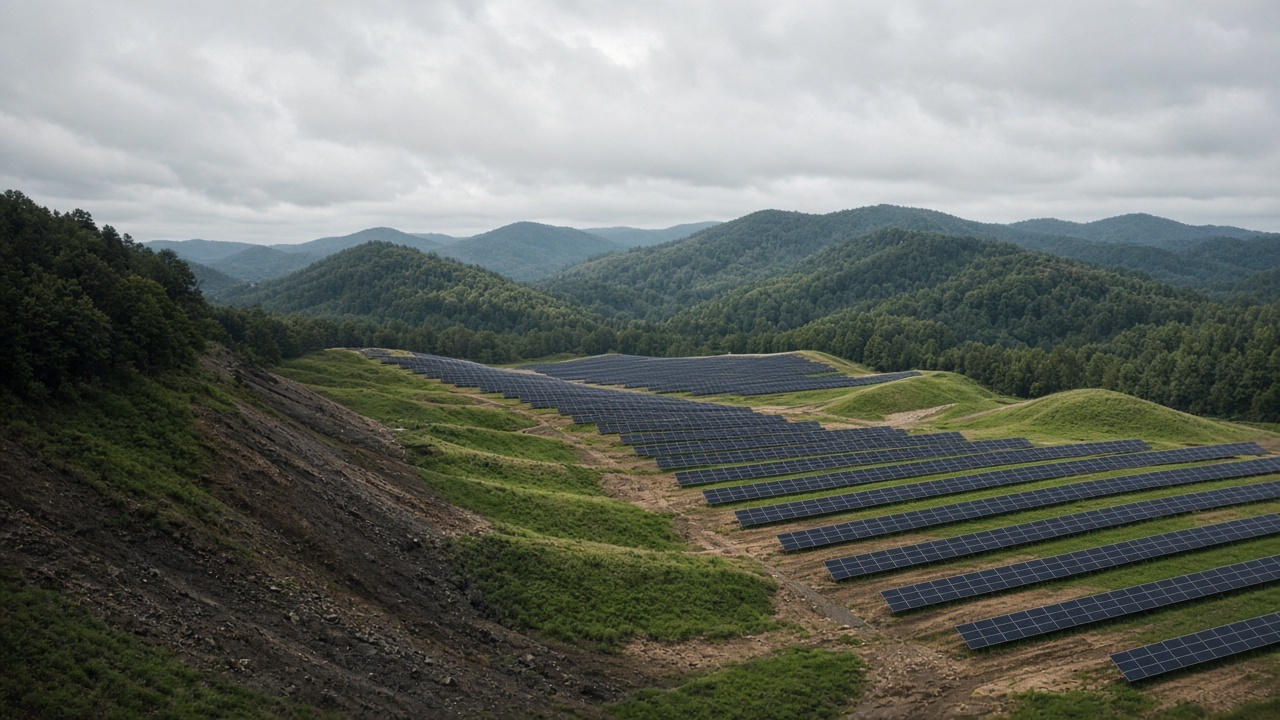
Growth is only a matter of time. BrightNight’s Starfire Solar Project, planned across roughly 7,000 acres of the former Starfire surface coal mine spanning Knott, Perry, and Breathitt counties, aims to reach 800 MW by 2030. If built out as planned, it would be the largest solar plant ever sited on a retired coal mine and a preview of the volume Kentucky’s recycling infrastructure will eventually need to absorb. For now, though, most end-of-life panels don’t come from a full decommissioning: they’re panels cracked in shipping or installation, manufacturing rejects pulled before they’re ever energized, and modules retired early after hail or severe storm damage.
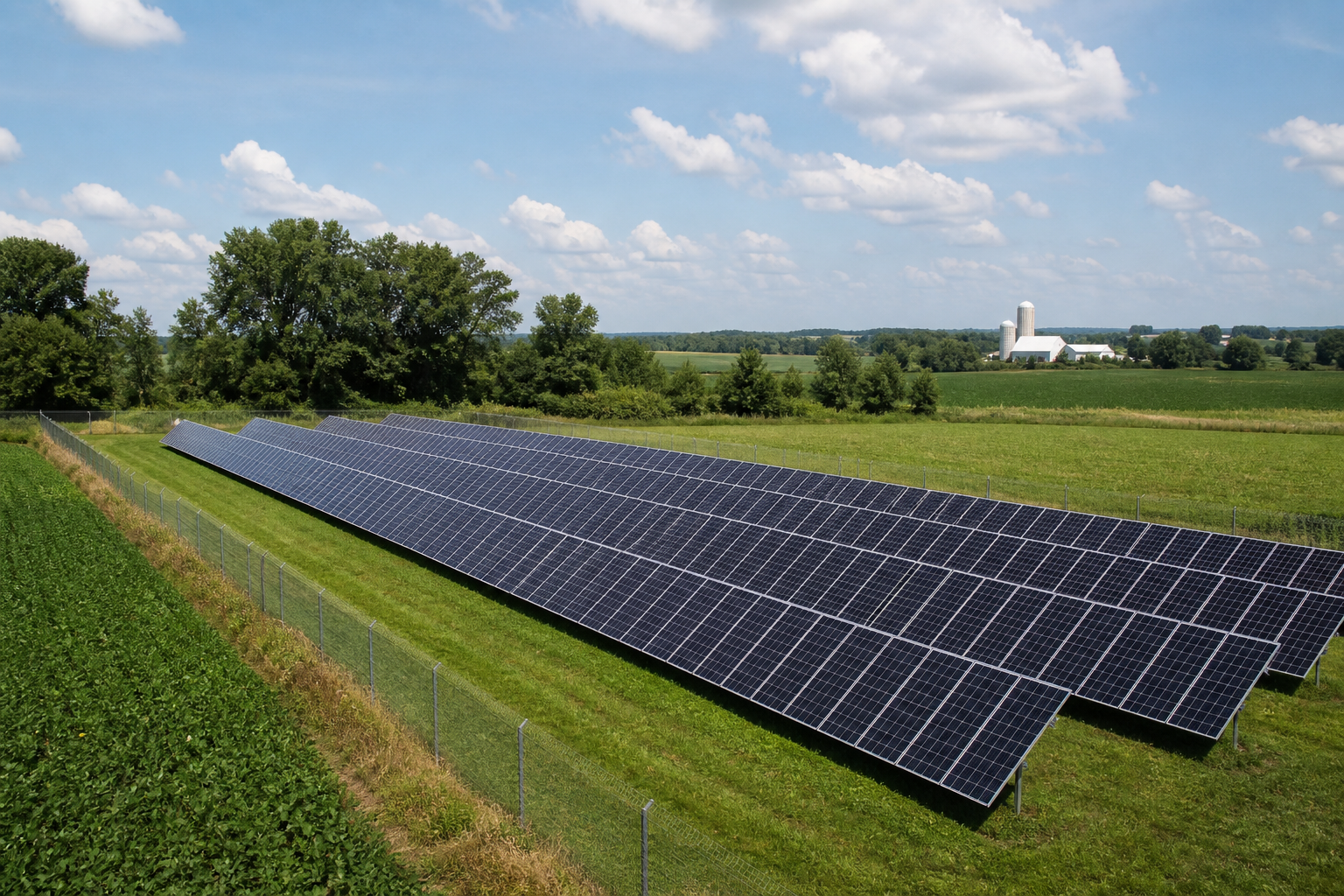
Source: Solar + Storage in Kentucky, SEIA
Kentucky is not among the small group of states (California and Hawaii) that classify end-of-life photovoltaic modules as universal waste. Retired panels here fall instead under the standard hazardous waste framework: Kentucky’s Energy and Environment Cabinet (EEC), through its Division of Waste Management, administers the state’s RCRA-authorized hazardous waste program under 401 KAR 39:060, which incorporates the federal identification and listing standards at 40 CFR Part 261 by reference.
That puts the hazardous-or-not determination on the generator, typically the solar asset owner, who has to run or arrange Toxicity Characteristic Leaching Procedure (TCLP) testing to check for leachable lead, cadmium, and other regulated constituents before deciding how a batch of retired panels can be moved. Panels that fail testing must be manifested and tracked as hazardous waste through a permitted facility; panels that pass can generally move as non-hazardous material, provided the owner maintains documentation to support that classification.
Two exclusions carved out of 40 CFR 261.4 change that equation when panels are headed to recycling rather than disposal: the 2015 Verified Recycler Exclusion and the 2018 Transfer-Based Exclusion. Routing panels to a recycler that can document that they qualify under one of these is frequently the difference between a straightforward transaction and an extended hazardous-waste paper trail.
Kentucky is also one of the few states in Comstock’s service area with a statewide decommissioning and bonding statute for utility-scale solar. Enacted in 2023 and codified across KRS 278.702 through 278.718 and KRS Chapter 224, the law requires developers to file a decommissioning plan before construction, have an independent, licensed engineer calculate the required bond at the greater of the net present value of decommissioning costs (less salvage value) or any local requirement, and complete removal within 18 months of a facility going idle.
Nationally, the EPA still hasn’t decided whether to grant solar panels a blanket Universal Waste designation, which would allow them to cross state lines under a single uniform rule. Until that changes, an interstate shipment must satisfy both the sending and receiving state’s requirements at once, a dynamic our free tool is built to help track, state by state.
Every panel Comstock Metals collects in Kentucky moves through a single, documented chain of custody, from the initial pickup to final material recovery at one of its own R2v3-certified plants, so nothing quietly ends up in a landfill or on a container ship bound overseas. That discipline matters more with each passing year as the state’s solar fleet ages: the capacity going in the ground today, including whatever eventually comes off a site like Starfire, is tomorrow’s recycling volume, and lining up a qualified partner now beats scrambling for one once a decommissioning deadline is already on the calendar.
Comstock Metals’ Kentucky customers get access to the full stack of what a solar owner needs when panels come down:
Because Comstock Metals runs each of those pieces itself rather than farming them out, Kentucky customers get one point of accountability that stays aligned with EEC and RCRA obligations, and a liability question that actually closes instead of lingering.
Comstock Metal's Qualifications:


Contact Comstock Metals today to learn more about decommissioning and end-of-life solar panel management in Kentucky.
Without a state universal-waste shortcut to lean on, the paperwork and the risk both sit with whoever owns the panels. Lining up a qualified recycler early, rather than after a facility goes idle, keeps hazardous-waste determinations clean, avoids a landfill outcome by default, and gets ahead of the bonding and removal deadlines Kentucky’s 2023 decommissioning law now imposes.
Yes, Comstock Metals can recycle any panel, regardless of type or condition. Crystalline silicon and thin-film modules alike are disassembled at a properly equipped facility, which separates the glass, aluminum framing, silicon, and other recoverable materials. Storm- and hail-damaged panels, common enough in Kentucky, come apart the same way as intact ones.
Yes, and Kentucky’s version linked here is unusually detailed for the region. Since 2023, developers have had to post a bond, calculated by an independent, licensed engineer against projected removal costs, before ground is broken, and the Energy and Environment Cabinet can call that bond if a site hasn’t been cleared within 18 months of shutdown.
As early or as late as it’s useful and needed. Planning support before a decommissioning date allows us to optimize budget and timeline across utility, commercial, and industrial installations.
The Division of Waste Management within Kentucky’s Energy and Environment Cabinet runs the state’s RCRA-authorized hazardous waste program, which classifies and tracks a retired module today. The 2023 decommissioning statute adds a second, separate layer specifically for utility-scale sites.